
The Atlas of Belonging is an independent, collaborative research project mapping community markers of belonging.
Join us.
The Atlas of Belonging officially launches at MPavilion, in Melbourne’s Queen Victoria Gardens, on Thursday 25 March 2026. You can register for this free event at Shaping the Atlas of Belonging presented by MPavilion.
What is it?
The Atlas is an evolving resource for designers, place managers, communities and sector leaders interested in progressing community inclusion and belonging. It brings together shared knowledge - including patterns of inclusion, design strategies, indicators and stories - emerging from university design studios, public conversations and community-based workshops. Over time, this material will be developed, synthesised and distilled to support research, practice and policy. The Atlas will continue to grow with different projects, partnerships and public moments contributing to its development.
Who is involved?
The Atlas of Belonging is led by Jocelyn Chiew FRAIA FRLA with input from a growing network of designers, researchers, practitioners and students.
Key collaborators for the Atlas of Belonging include Tim Dow - Tim Rob Don Dow and Annelise Porter - UrbanID, who are co-curating the Atlas’ launch and public program at MPavilion and Melbourne Design Week.
Contributors include Emmaline Bowman - STEM Landscape Architecture and Design, Jac Semmler - Super Bloom, Heather Chapman - Landscape Architect and Urban Planner, Jerry de Gryse - Inspiring Place, Michelle Williams - Creative Strategist and RMIT University - Landscape Architecture students and staff.
If you would like to get involved, please reach out to Jocelyn at the link below.
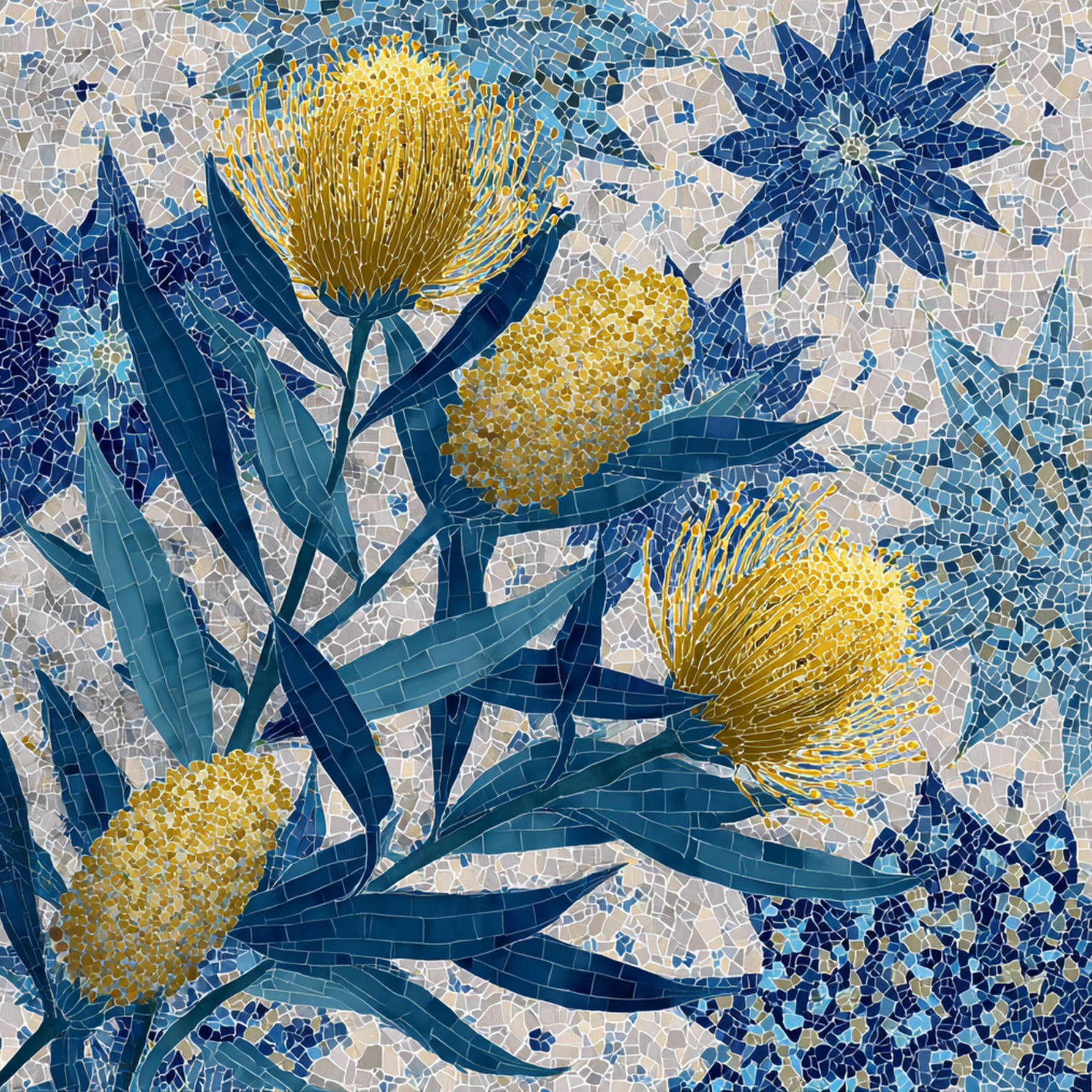
"Belonging emerges when public spaces allow cultures and unique individuals to blend quietly and naturally, forming a shared narrative where difference exists without standing apart from one another.” Design for an Islamic Australian tile, combining motifs from the Quran and Australian native flora. Image by RÜMEYSA KUL as part of RMIT Landscape Architecture studio - Sites of Belonging 2025
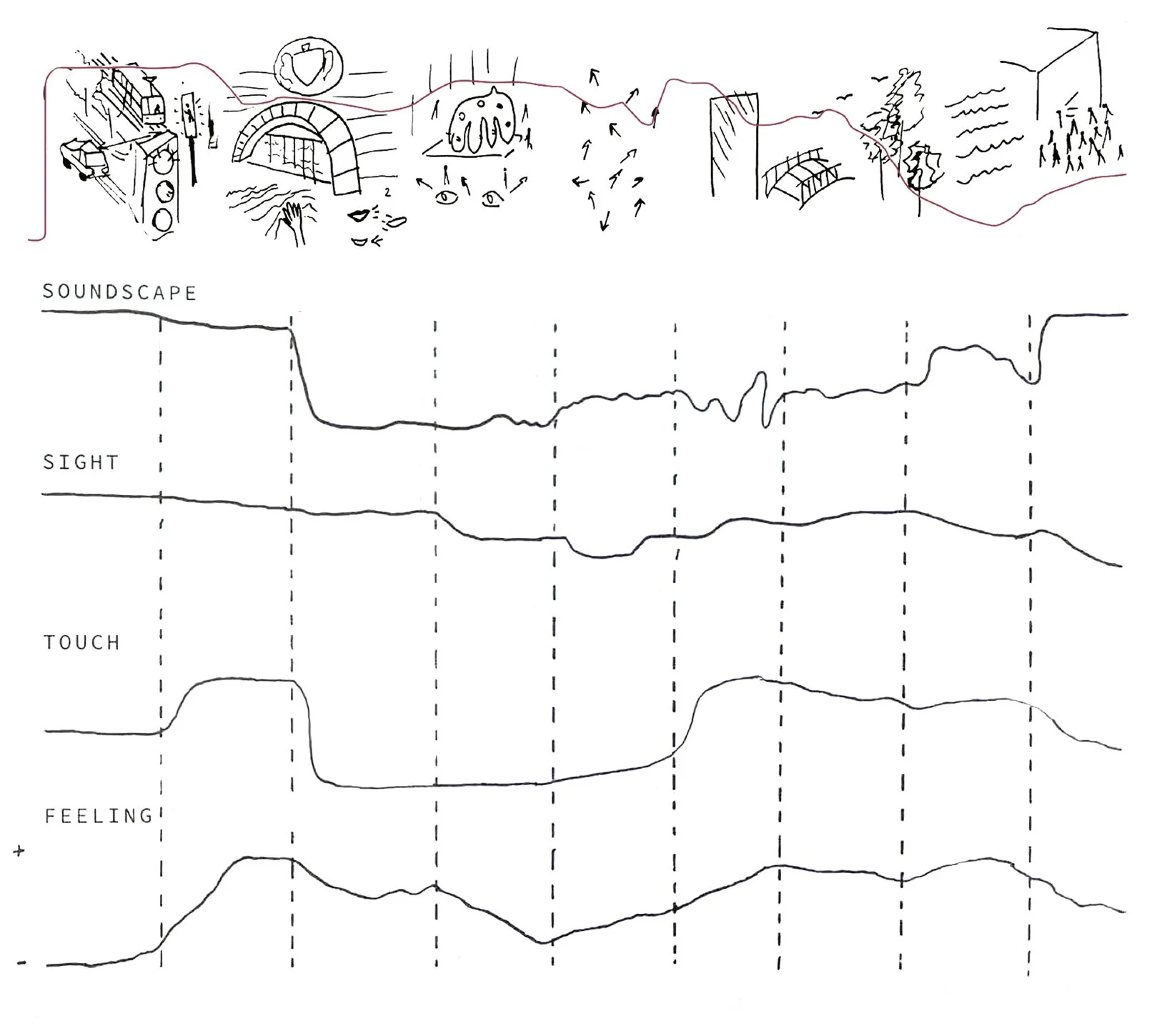
'Under Pressure' develops a spatial strategy grounded in sequences of gathering, holding, and releasing to modulate sensory load. Informed by close engagement and observation, these conditions create public spaces that are more legible, welcoming, and supportive for neurodiverse people. The drawing maps disturbances - sound, sight, touch and feeling across the Melbourne Arts Precinct - revealing where sensory pressure accumulates and eases. The project makes visible the often-unseen impacts of public environments on neurodiverse bodies. From this mapping, the project proposes a set of design guidelines intended for broader application across the city. Project by LUCINDA THOMPSON as part of RMIT Landscape Architecture studio - Sites of Belonging 2025
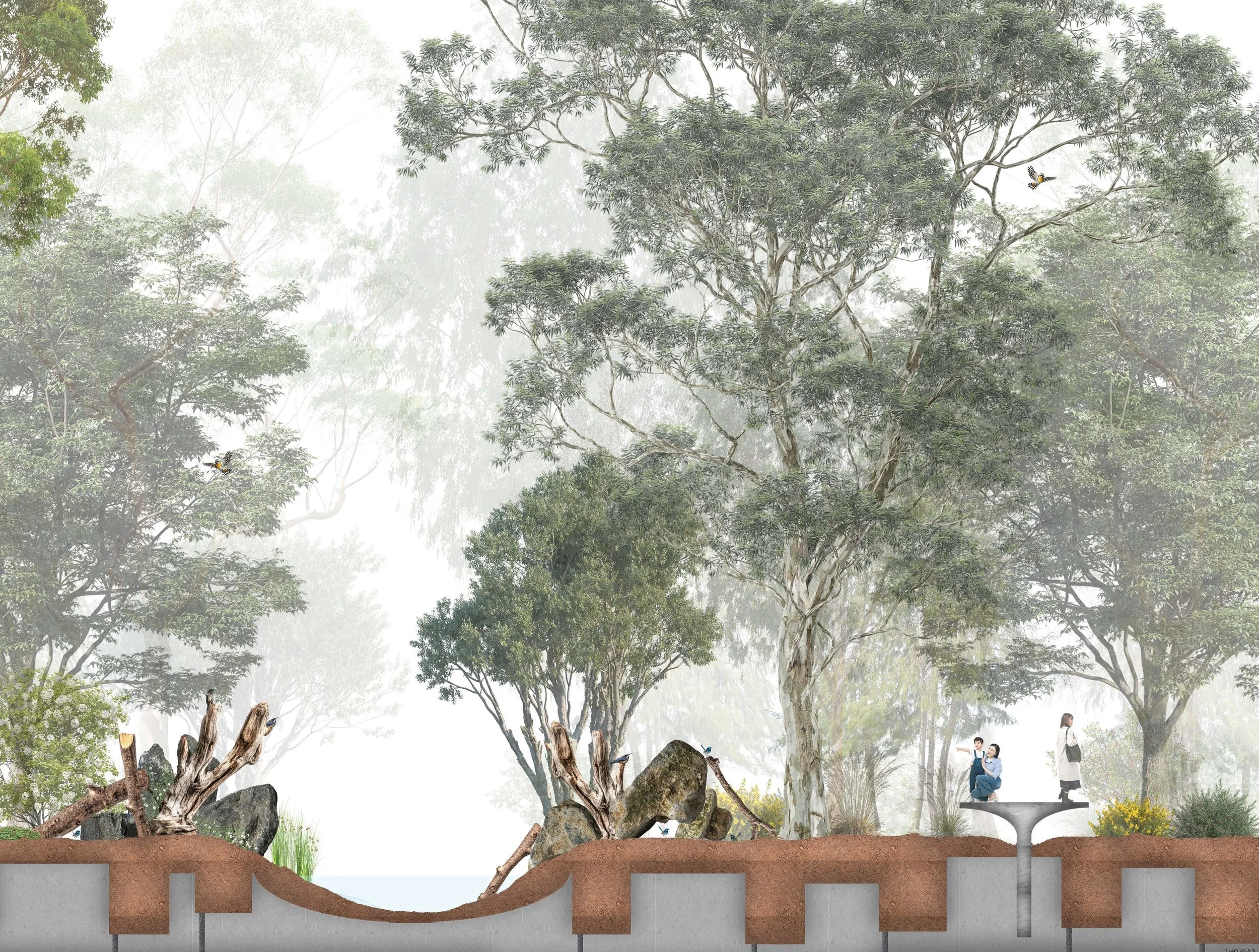
‘Urban Avisary Refuge’ foregrounds designing for Australian songbirds in urban environments. It manipulates above and below ground conditions to foster habitat formation. Inclusionary and exclusionary zones explore the coexistence of humans within the refuge. Design proposal by MAX LEONARD as part of RMIT Landscape Architecture studio - Sites of Belonging 2025
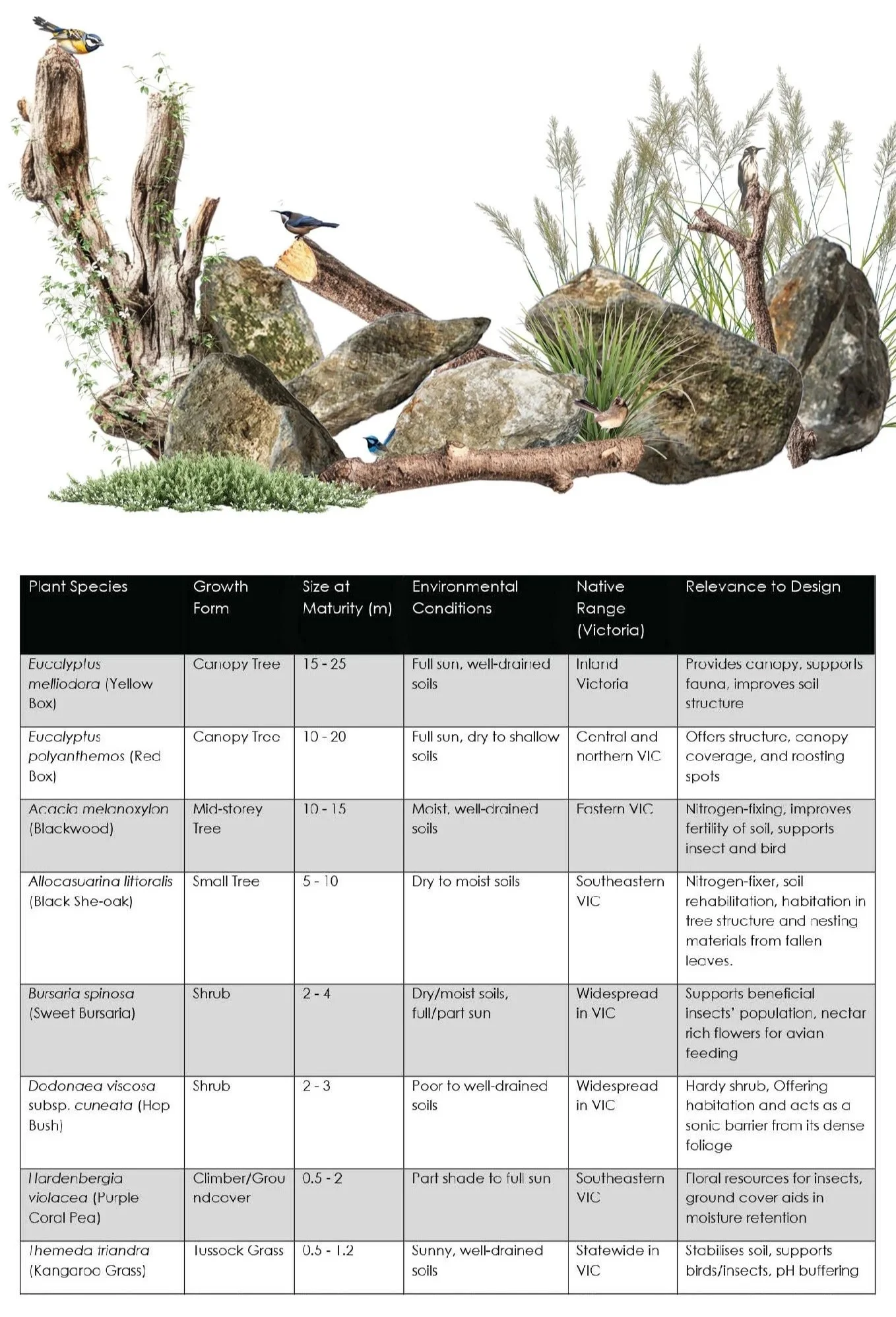
Bespoke planting palette (excerpt) for 'Urban Avisary Refuge', informed by Hassell's 'Wildlife Habitat Design in the Public Realm' talk which shared the significance of hides and materiality such as rocks, wood and flora to formulate a super ecology. Design by MAX LEONARD as part of RMIT Landscape Architecture studio - Sites of Belonging 2025
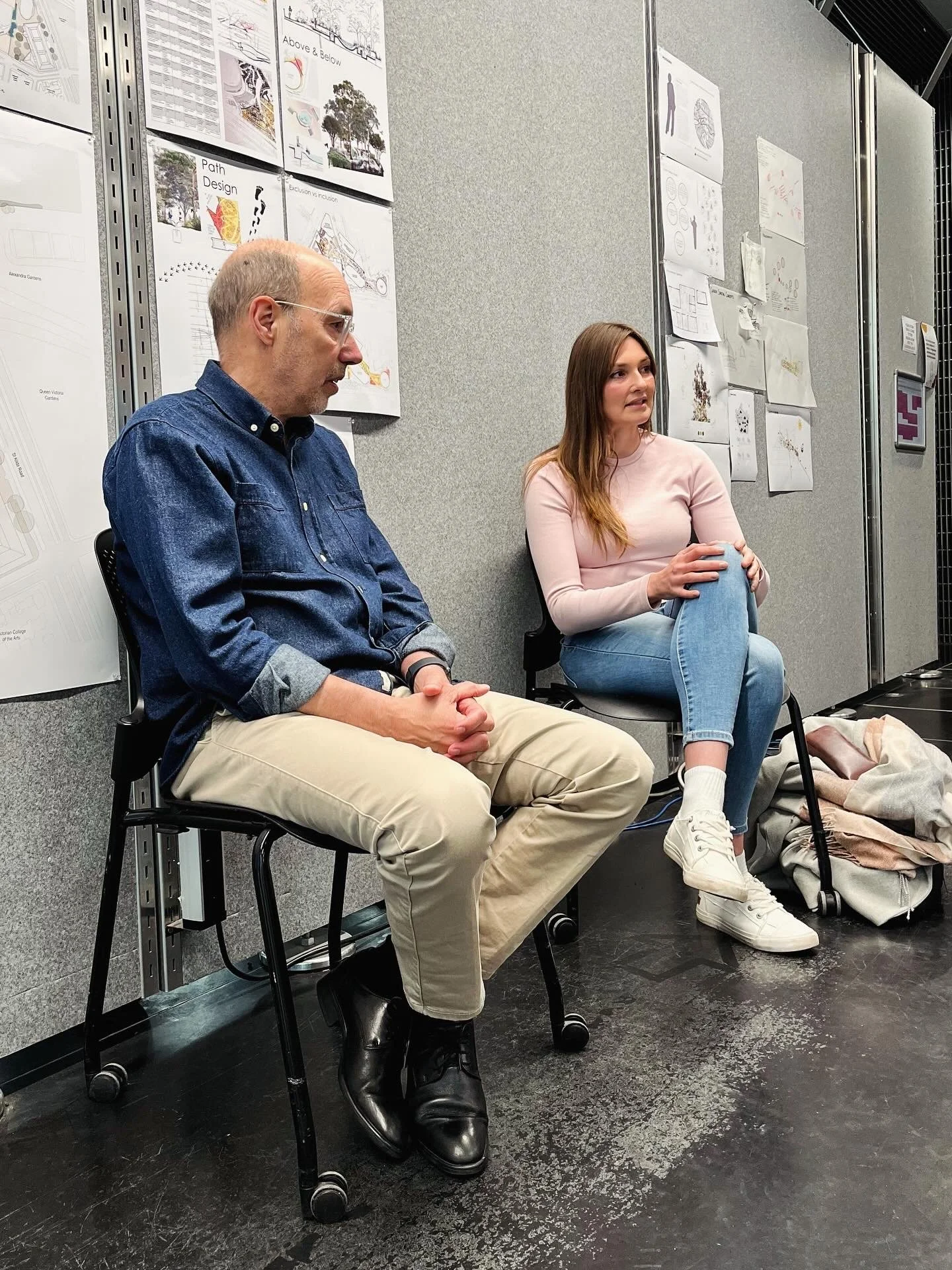
Design studio workshop with landscape architects, JERRY DE GRYSE FRLA, Founder of award winning Nipaluna (Tasmania) based practice, Inspiring Place and EMMALINE BOWMAN, Founder of award winning Narrm (Melbourne) based practice, STEM Landscape Architecture and Design. Part of RMIT Landscape Architecture studio - Sites of Belonging 2025
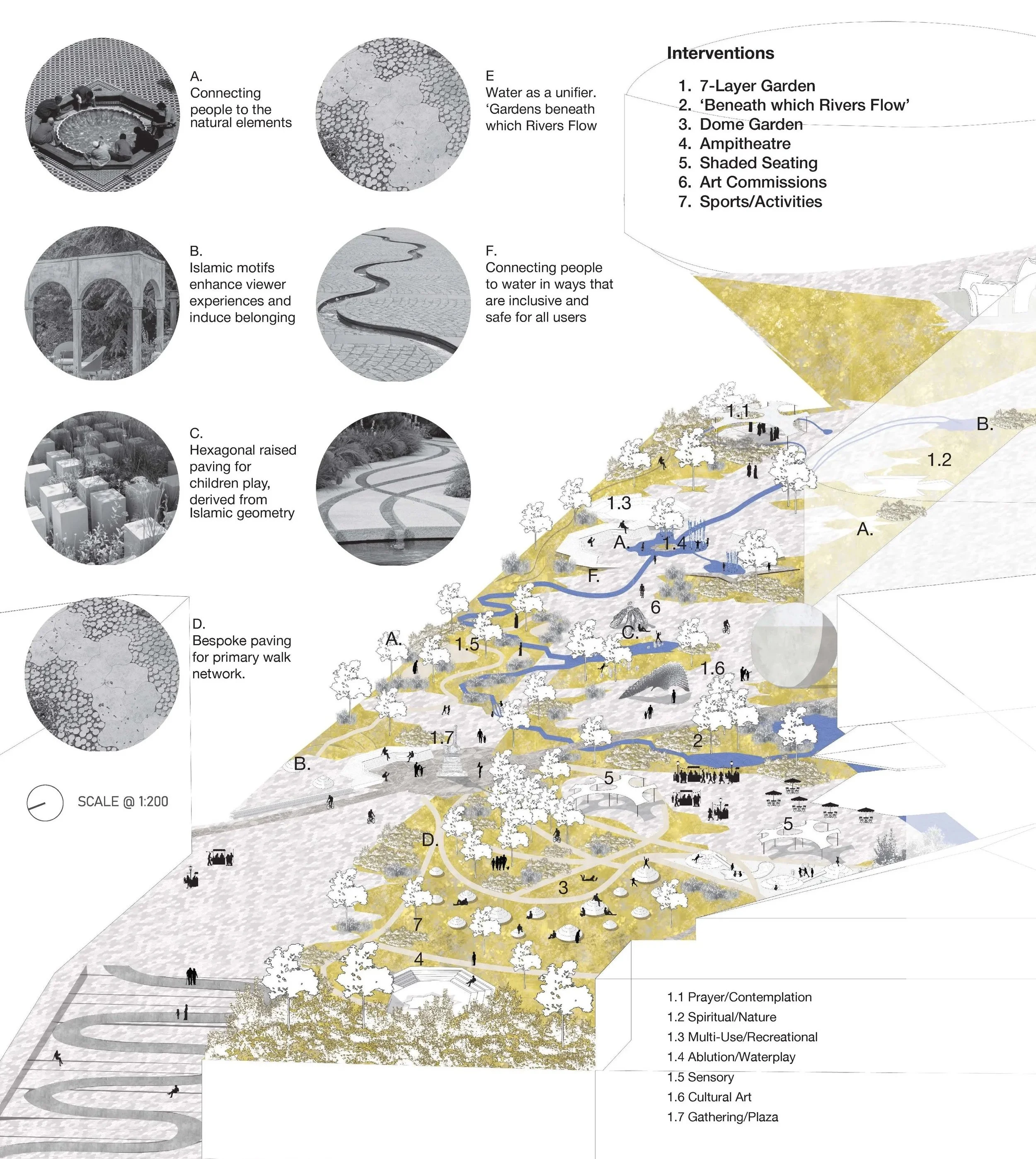
Proposal for an Islamic-informed Australian garden, building on the persona of a Muslim-Australian woman with protanopia (red-green colour blindness). Design by RÜMEYSA KUL as part of RMIT Landscape Architecture studio - Sites of Belonging 2025

The trzepak, or carpet-beater frame, originated as a utilitarian household fixture for cleaning rugs in shared courtyards of apartment blocks across Poland and other former Eastern Bloc nations. Typically made of steel tubing, it evolved into a form of spontaneous community infrastructure, serving not only domestic chores but also as a central meeting spot, informal playground, and stage for social exchange. Over time, it became emblematic of neighbourhood life: a threshold between the private and public realms where generations gathered, conversed, and played. In landscape architectural terms, the trzepak reflects a vernacular form of social infrastructure, a micro-scale urban element that fosters communal identity and place attachment. Observation by AGATA PYTKA as part of RMIT Landscape Architecture studio - Sites of Belonging 2025. Photo © Ignacy Płażewski / Wikimedia Commons (CC BY-SA 3.0)
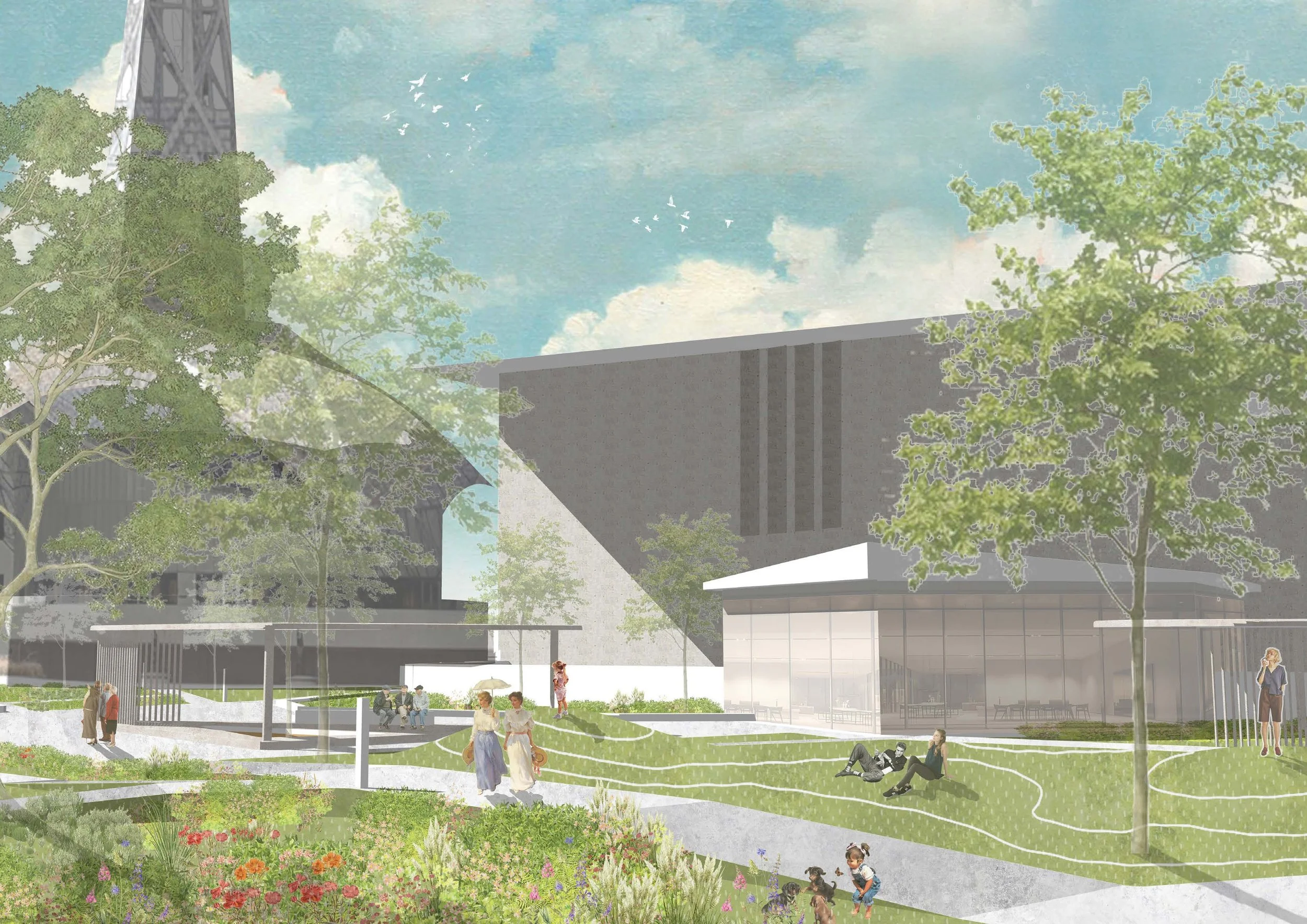
Proposal for an Australian garden informed by the 'Safer Parks for Women and Girls Guidance', focussing on topography as the agent for prospect, refuge and equity. Design by JINRUI RAY CHEN as part of RMIT Landscape Architecture studio - Sites of Belonging 2025
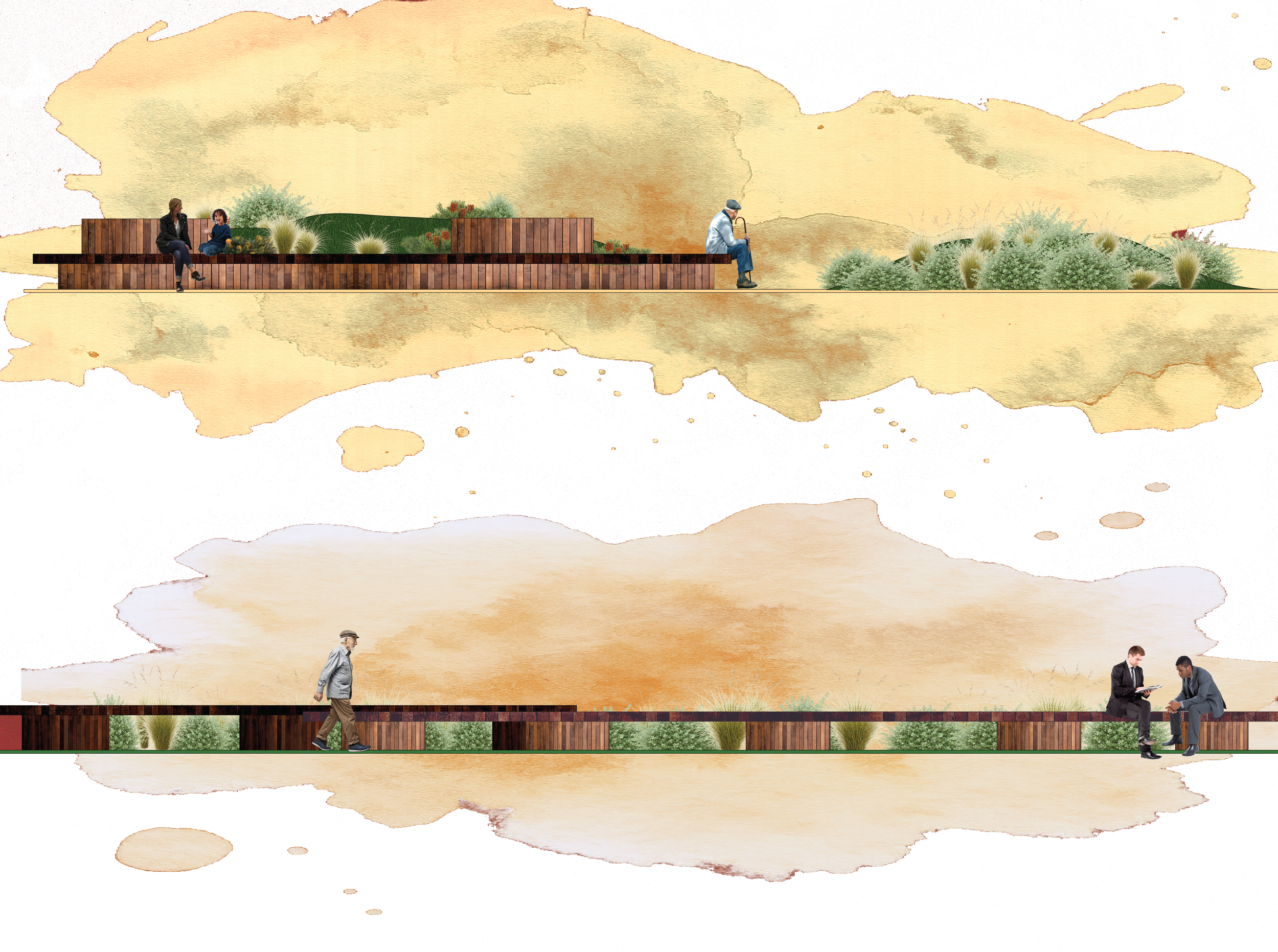
Proposal for a public garden, 'Psithurism Place', (the calming, natural, and sometimes almost human-like sighing sound of trees and leaves), foregrounding the needs of immunocompromised users and their carers through seating diversity, use of low allergen planting and immersive soundscapes. Design by ALEXANDROS TSAKETAS-CHIU as part of RMIT Landscape Architecture studio - Sites of Belonging 2025
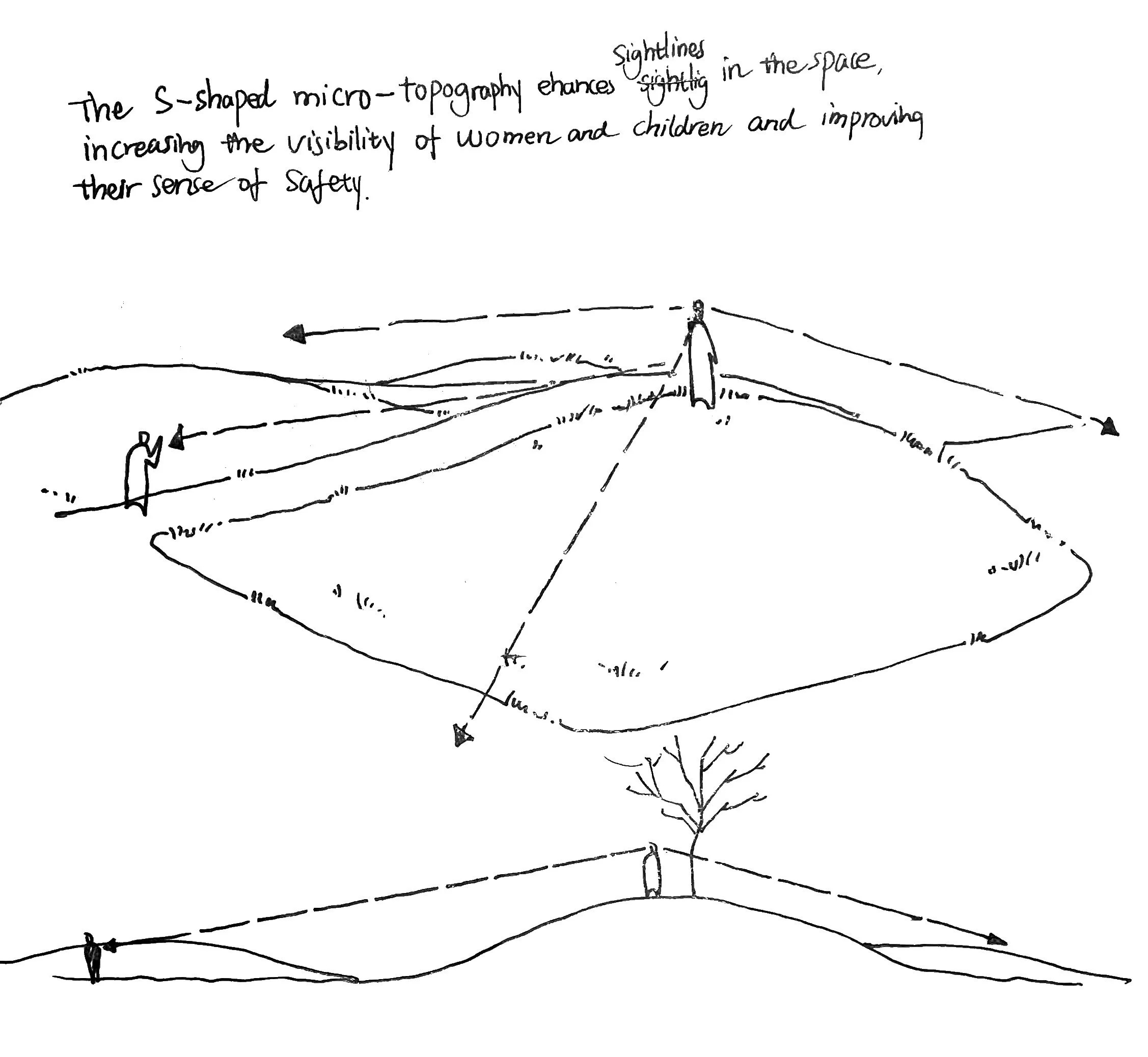
Topographical study informed by the 'Safer Parks for Women and Girls Guidance' by JINRUI RAY CHEN as part of RMIT Landscape Architecture studio - Sites of Belonging 2025
© 2026 The Atlas of Belonging and The Belonging Project. All rights reserved.
Unless otherwise stated, the content on this website is protected by copyright under the Copyright Act 1968 (Cth). Copyright in individual contributions remains with their respective authors. The compilation, curation and presentation of material are copyright of The Atlas of Belonging. Content may not be reproduced, adapted or distributed without prior written permission, except as permitted under fair dealing for the purposes of research, study, criticism or review, with appropriate acknowledgement.